Showing posts with label Language. Show all posts
Showing posts with label Language. Show all posts
Thursday, 7 March 2019
Deutschland 83 Trailer Breakdown
1) The opening of the trailer uses sound and editing to draw the audience in. Explain why this is effective.
The trailer uses symbol crashes synced with the beats of the shot changing to appeal to audiences and show the power of the cuts, the loud crashing of the scene changing. This creates a tone for the trailer, a powerful slow build into the fast paced cuts and action of the later half of the trailer, showing the show will be about the fast paced action as well as the methodical story.
2) How does the trailer use action and enigma codes (Barthes) to encourage the audience to watch the show?
By leaving every scene opened ended and unfinished with no audio from the scene , the audience is left thinking about the context of the scenes, the resolution of the scenes and how the scenes will affect the show , with the scenes with action carrying the most weight and importance with enigma codes.
3)PRINT THREE SCREENSHOTS Pick three shots/scenes from the trailer that capture the spy thriller sub-genre. Why might this appeal to an audience? Try and apply Neale's genre theory 'repetition and difference'.
4) PRINT THREE SCREENSHOTS Pick three examples of mise-en-scene from the trailer that capture the 1983 setting the confirm the sub-genre of period drama. Why might this appeal to an audience?
5) The trailer uses the song 'Two Tribes' by Frankie Goes To Hollywood. Why did the producers select this soundtrack for the trailer? Read the lyrics as well as watching visuals.
The producers have used this as the song describes two sides fighting over one another, with only one able to be the victor, like the tension between the east and the west of Germany. This intertwined with Regan speech about 'evil in the modern world' and showing characters from the East creates the sense that the audience will be rooting for the west Germans while the east are bad.
6) The only words heard in the trailer are in English. Why do you think the UK trailer avoided subtitles or German dialogue?
To appeal to the western market more, hearing German being spoken may turn a western audience off of the show as they will need to watch subtitles. Only English is spoken to show the audience that the show does market to the English , rather than being a show made and marketed to only Germany

Sunday, 27 January 2019
How to write an exam question
P| oint
E| xample from scene
E| xplore:
C| amera
E| diting
M| ise En Scene
S| ound
Refocus on Question + Audience
COMPARE
REPEAT!!
Example question from first episode;
Explore the way that different groups of people are represented in ST and D83
• audience
• media language
P: In ST, we see a counter typical representation of women (especially considering the 1980s setting) in that we see empowered women.
E: We see the ‘social worker’ murder Benny, Eleven kills two men, and although Nancy isn’t aggressive, she does control the scene with her and Steve.
E: It is an interesting subversion of stereotypes – the 1980s setting leads us to expect submissive, powerless women, but the 21st Century construction transfers modern ideologies and values and empowers the women.
CEMS: When we first meet the social worker, we view her from a high angle shot, from the point of view of Benny. This reinforces the patriarchal hegemony which tricks us into thinking that she is a typical submissive woman. However, when she shoots Benny, she is elevated onto an equal level with the other government officials, and is even empowered through a low angle shot. This reinforced by the editing – the screen time she is given compared to the (silent and nameless) male officials is significantly greater, therefore empowering her.
A: This shocks the audience, which is important for narrative, but the Duffer Brothers are also trying to highlight the everyday sexism in society – even though we are a modern audience, we fell into the trap of putting sexist assumptions onto the scene.
Saturday, 12 January 2019

Thursday, 30 November 2017

Tuesday, 28 November 2017

Monday, 27 November 2017
The Social Media Effect
News on Social Media is:

Clay Shirky:
Media used to be distributed one to one or one to many in a group of colleagues or friends.
With the invention of the internet and the rise of social media news reporting, media has become many to many as groups of people on comments and public posts interact with each other and discuss their personal views and the views of other people in the comments
- More accessible , therefore quicker and better than newspapers
- Participatory media as people can comment and react to the news with feedback to the publisher.
- The use and growth of 'We Media' as the public report on news headlines before they break.
- Democratisation of the news , less lying in the news as people can prove the truth fr5om eye witness accounts being published on twitter and other social medias.
Clay Shirky:
Media used to be distributed one to one or one to many in a group of colleagues or friends.
With the invention of the internet and the rise of social media news reporting, media has become many to many as groups of people on comments and public posts interact with each other and discuss their personal views and the views of other people in the comments
Thursday, 9 November 2017
News Article Analysis
The 5 Ws of journalism -
WHO is the story about?
WHAT is the story about?
WHERE did the story happen?
WHEN did the story take place?
WHY did it happen?
The framework of a newspaper article is as follows:


WHO is the story about?
WHAT is the story about?
WHERE did the story happen?
WHEN did the story take place?
WHY did it happen?
The framework of a newspaper article is as follows:


How has the following article been constructed:
Narrative of the article: Reveals information in such a way as to keep the reader interested but also to aid their understanding of what is going on.
Structure of the article: Short paragraphs are important in news reports and each one is used to develop the narrative of the story. There is also a structure to news stories in that all the important info is given at the start and less important details are added later. In this example, the important info is that a coroner will not release Brady’s body until he is satisfied his ashes won’t be scattered on the Moor. Arguably less important information comes later such as how he died.
Headline of the article: They are an important hook to capture the audience and encourage them to pay attention to the article. There is an assumption in this headline that the audience will know who Brady is, and the word ‘moor’ will remind them if they have forgotten.
The Intro of the article: Like the headline, the hook should grab the audience’s attention and encourage them to want to read the rest of the article. Intros are usually very short – maybe 30 words – and should be able to be read and digested quickly and easily. The intro sums up the main point of the article – in this case the discussion of Brady’s possible final resting place.
Focus of the article: Journalists often present stories from a human interest angle, putting people at the centre of their stories. Quotes are often used to give a human touch by emphasising the importance of the people in the story. In this instance, Brady is the focus but the sympathy clearly lies with the victims and their families. A quote from one of the victim’s brothers shows this.
Wednesday, 8 November 2017
Broadsheet VS Tabloid

The Guardian:
(Broadsheet - Left wing Labour supporter)
The Guardian has a heavy political approach to their news reporting which can be seen in the main article on the front page of the 8th November 2017. The Guardian consists of a large coverage of articles on the front page as apposed to being photograph based such as a tabloid like The Sun. Due to The Guardian being a Broadsheet, the Guardian tries to report on more hard news reports such as the political environment and the economy rather than soft news like celeb gossip and sports news. The Guardian markets to the A, B ,C1 audiences as it is a tabloid that wants to interest the higher intellects of the public. The age demographic for the Guardian is 25 - 40 as its left wing views appeal more the a younger audience.

The Sun:
(Tabloid - Right wing Conservative supporter)
The Sun has a very soft news approach to their reporting due to them being a tabloid. This can be seen from the front page of the November 8th 2017 edition with the high photograph to written text ratio, the photograph being a picture from night time TV, Strictly, which is soft news. The Sun is a tabloid so therefore tries to market themselves to the C2, D ,E demographics with mainly reporting on soft news to try attract the attention of more lower class buyers who want to know all of the celebrity gossip or sports news. Tabloids such as The Sun are losing buyers due to the celeb gossip appearing first on social medias such as twitter therefore making tabloids and newspapers obsolete as people have already heard about the news for free earlier. Tabloids such as the Sun try market themselves to the age demographics of 25-30 and 55-65 as the celeb gossip appeals more to the 25-30 year olds but the right wing views appeal to more of the older generations who believe in traditionalism and the government.
Comparisons of both:
Masthead: The masthead of The Guardian is bold and lowercase to show sophistication and calmness rather than the shouty bold uppercase text of the sun. The uppercase shows the flashy eye catching nature of the sun.
Layout and Style: A Broadsheet like the Guardian seems very sophisticated due to it having a lot of text compared to photography and its dull colour scheme , making it appeal to the higher demographics. The Sun however is a tabloid, meaning that it tries to be very eye-catching with it having a lot of images and photos on the front page to interest the viewer to make them buy it over other papers.
Language: The white and blue , slightly duller tones of the Guardian connote sophistication and cleverness. The same can be said with the amount of text on the page, connoting cleverness and smartness. The bold and bright colours of the Sun connote the flashing and extraverted nature of the Sun and their target demographic. The use of big bold text also denotes the big and flashy view of the Sun.
Monday, 6 November 2017
Gatekeeping
Gatekeeping is a term applied to editing and filtering process where decisions are made to let some information 'pass through' to the receiver (audience) and other information remains barred.
How news publications get the news?
How news publications get the news?
- Leaks/leads (phoning in)
- We media (reported on social media)
- Investigative media (sending out journalists to see if any news will break or not)
- Press releases (groups contacting the news publications with events happening)
- Ambulance chasing (Journalists chasing after ambulances to report the happenings and interview the grieving family)
Friday, 3 November 2017
BFI Southbank Talk
I got these notes from Rob Miller's talk on the OCR and Eduqas A level media course:
Film:
What makes a mainstream film?

Film:
What makes a mainstream film?
- Star Marketing
- High Budget
- Established Director
- CGI
- Known company behind the film (Disney)
- Family Friendly
- High Quality Soundtrack
- Wide/saturated distrubution (distrubuted all over the world)
- Safe genre(a film easily marketed to audiences)
- 1 of the Big Six
What makes a independent film?
- Niche marketing, small target audience
- No CGI
- Regional representation
- Not meant to be entertaining, meant to show a political message
- Funded by a range of different organisations
- Crowd funding smaller independent films
- Low budget
- On location shooting, no studio work
- Not a safe genre, social realism
- More critical success (Awards + Reviews) than commercial success
Key Terms For Film:
Distribution / Distributer : Getting films out to cinemas, like disney being the distributer
Digital Technology : Social media marketting
Synergy : 2 organisations / 2 parts of a film working together. Straight Outta Compton - film helping the music sell and vice versa.
Convergence : Where a film is available/consumed and can be merketted on a number of cross media platforms.
Straight Outta Compton:
Is it a mainstream film or not?
Is it a mainstream film or not?
- Black American history
- Synergy - music and film sell each other
- Semi star marketing (Dr Dre, Eazy E and Ice Cube)
- Political statements (Institutional Racism)
- Global distribution by the Big Six
- Young male target audience
- Emotive representation
- Little man VS Bigger man story
- Highest grossing music biopic ever
- Medium production budget ( $50m budget)
Video Games:
David Gauntlett: 'Video Games dont have an audience do they'
Growing older gaming demographic
Key Terms For Video Games:
AAA games : high production/marketed games
Publisher : Distributer of the game
Developer : Maker
Designer : People working with the games software
PEGI : Video game classification
Engine : A program used to build a game off of
Oligopoly : A group of companies that make a AAA game together
Minecraft -
Started as Indie, became huge
125 million copies sold
14 -25 , ABC demographic
Assassins Creed III -
Historic
Violence Sells
Asperational PEGI rating 18, people want to play an 18 to see what passes as an 18
Newspapers:
Conventions of a tabloid:

- Restricted Language Code
- Dramatised facts
- High ration to photographs compared to text
- Varied Fonts
- Subjective Epistemologies - opinionated ways of telling a story
1 company owns most local newspapers in the UK, Trinity Mirror
Soft news - Celeb news, Not very hard hitting, TV analysis, Sport, Voyeuristic Crime
Hard news - Economy, Boring news, Education, Politics, Health care, Business
We media - Public reporting the news through social media before news publications can.
Radio:
Zoo format - Bits and Pieces , Presenter lead e.g. Nick Grimshaw (Radio 1)
Kiss, huge competition to Radio 1 Breakfast show
PSB - Public Service Broadcasting (BBC)
Wednesday, 1 November 2017
Newspapers
Conventions of a Broadsheet newspaper:

 Conventions of tabloid newspapers:

- Formal
- Clean layout
- Small, lots of font
- Minimal Pictures
- Contents above the master head
- Serious Press/Headlines
- Aimed at A, B ,C1 demographics
- Little colour on front
 Conventions of tabloid newspapers:
- Flashy, colourful
- Aimed at C2, D ,E demographics
- Big pictures, dramatic
- Quotes from the article
- Lots of different title
- Colloquial Language
- Popular press
- Celeb gossip
News Introduction
Current News happening in the world today:
Newspaper overview:
- Terror attack in NYC, Lower Manhattan. Declared sympathies with ISIS however ISIS haven't claimed the attack as their own. Attackers own motive with 8 killed , 50 injured.
- Sexual assault allegations, Harvey Weinstein & Kevin Spacey & Labour MPs sexually assaulting women and men of younger ages.
- Catalonia, declaring independence , Spain refusing Catalonia independence , fighting in the streets and at polling stations.
- Bake off winner leaked before airing
- V-Fest rebranded
Newspaper overview:
- Newspapers have been around since mid 17th century (probably earlier in various forms)
- Until the 20th century, newspapers were the primary means of bringing news to the public.
- Unlike news broadcasting , newspapers do not have to be imparcial they are allowed to have political bias.
- They are largely self regulating . they have a regulating body - IPSO, the independent press standards organisation ( was the press complaints commission )
- Leveson Inquiry 2011 - in response to allegations of phone hacking and tapping at The News of the World ( amongst other ) was carried out. it was suggested a code of conduct and tighter controls to be imposed - nothing has happened about this ( apart from the new IPSO instead of PCC )
Wednesday, 20 September 2017
Stuart Hall: Theorist

Stuart Hall came up with the theory that communication is a process involving encoding by producers and encoding by audiences. The idea that there are three hypothetical positions from which messages and meanings may be decoded: the preferred reading, the negotiated reading and the oppositional reading.
The preferred is the producers intended message .
The negotiated is when the audience understand the message but adapt to suit their own values.
The oppositional is where the audience disagrees with the preferred reading.
Tuesday, 19 September 2017
Mise-En-Scene
From this Introduction PowerPoint, I learn the 5 main elements of Mise en Scene.
The 5 main Elements of Mise en Scene are
- Settings and Props
- Costume, Hair and Make Up
- Facial Expressions and Body language
- Lighting and Colour
- Positioning of characters and/or objects within the frame
On slide 4, we were asked to find out what settings and props are used for these genres of films:
- A science fiction film (FINISH)
On Slide 6, we were tasked to analyse the following frames from films by how each scene makes you feel with the facial expressions used:
Image 1:

By using the third element of mise en scene , I can learn that the characters are puzzled and confused by what is off screen. The facial expression shows that the characters may also be scared by what is off screen as well.
Image 2:

Using the third point of mise on scene, I can learn that the characters are concentrating very hard to what is being said from the other side of the phone. Their facial expressions may also show they may be confused by what is being said.
Image 3:

With the third point of mise en scene, we can learn that the commander is quite a physically and mentally imposing person by his gestures of his hands on his hips and his scowling face. We can tell that the soldiers next to him seem oppressed by him as we can see their heads drooping at his figure.
On slide 10, we were tasked with analysing the positioning of the characters within the following shots/images:
Image 1:

In this shot, from the positioning of the characters on screen, I can see that the characters may be annoyed at each other from the space between them. This may also provide comic relief for the audience as what look to be the two main characters are angry at each other.
Image 2:

The positioning of the axe within the piece , in the centre of frame, shows that the axe is clearly the focus of this scene . It is in the foreground and it the dead centre of the shot in focus, showing that the director wanted it to be seen and that it is important for the shot.
Image 3:

The positioning of the two characters in this shot show that they are the main characters and that they are equal to each other as they both share the same amount of the shot. This may be to promote equality and diversity within film making.
Image 4:

The use of Riddick in the centre of frame shows that he is the main character of the film from the film poster. He also appears above the character name RIDDICK , hinting that the character is the centre of the film.
On slide 20 , we are asked to label the types of lighting used in these shots:
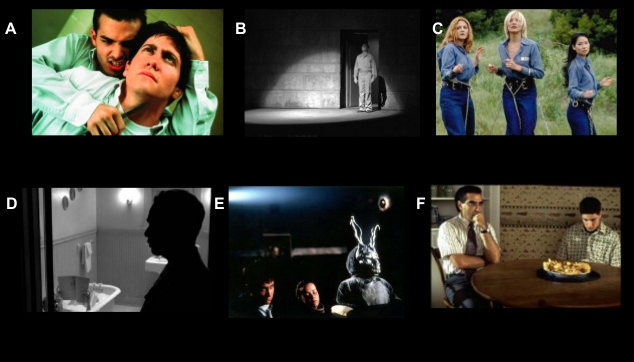
A. Back / Key lighting
B. Key lighting
C. Filter lighting
D. Back lighting
E. Back lighting
F. Filter lighting
Tuesday, 12 September 2017
Semiotics , Denotations and Connotations
Semiotics is a key phrase used in conjunction with media A -level. Semiotics is the study of signs and symbols and their use of interpretation. This is how we read images and pictures to decode them and make sense of what they mean to us as a consumer. Semiotics are made out of two main techniques, Denotations and Connotations.
Denotations are what we see from the image e.g. A rose is red
Connotations are what we feel/understand from the image e.g. The colour red connotes love and thats why we use roses as a symbol for love.
Analysis of the Guardians of the Galaxy using Denotations and Connotations:

We can see from this poster that very bright and luminous colours are being used to make the movie poster stand out and make it unique, making people want to see the film hoping it will be something new to the genre of superhero films. In addition to this, the bright colours connote the 1970s and 1980s , with extravagant and bright fashion, which the film is heavily based around, making people want to see it if they loved the 70s and 80s, they feel they will like this film as well. We can also see the lead character wearing a red coat to make him look appealing. However this jacket also connotes feelings of power and leadership from him, confirming to the audience that he is the main lead character.
Denotations are what we see from the image e.g. A rose is red
Connotations are what we feel/understand from the image e.g. The colour red connotes love and thats why we use roses as a symbol for love.
Analysis of the Guardians of the Galaxy using Denotations and Connotations:
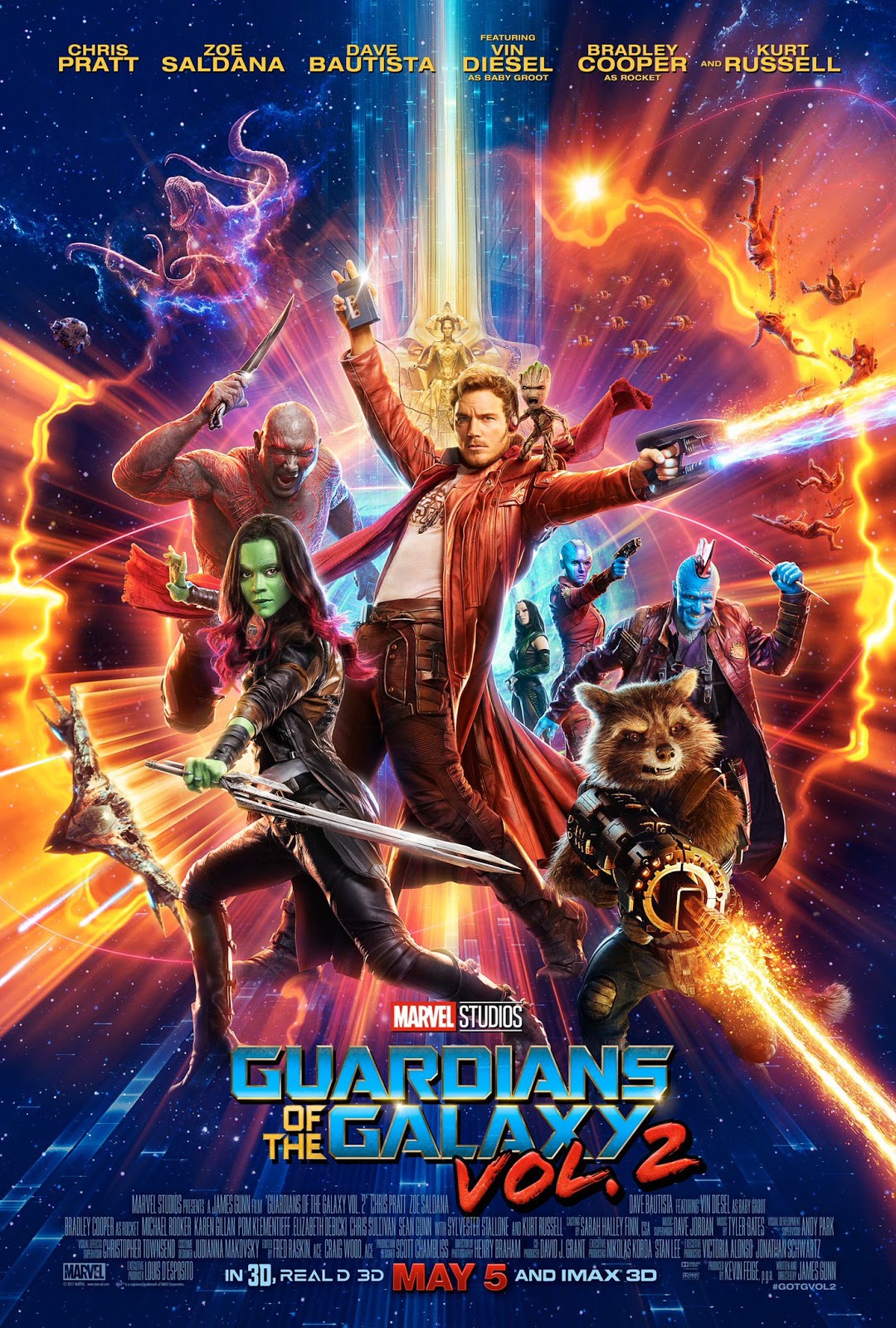
We can see from this poster that very bright and luminous colours are being used to make the movie poster stand out and make it unique, making people want to see the film hoping it will be something new to the genre of superhero films. In addition to this, the bright colours connote the 1970s and 1980s , with extravagant and bright fashion, which the film is heavily based around, making people want to see it if they loved the 70s and 80s, they feel they will like this film as well. We can also see the lead character wearing a red coat to make him look appealing. However this jacket also connotes feelings of power and leadership from him, confirming to the audience that he is the main lead character.
Monday, 11 September 2017
Analysis of the Anagram Distinct
The DISTINCT anagram is the main way we analyse genre in media. The anagram DISTINCT consists of :
Describe the detail
Industry or Institution (who/what company made the piece)
Setting
Themes
Iconography (props)
Narrative (storyline)
Characters
Textual Analysis of Mise en Scene
Mise en Scene is everything you are able to see in the scene. For this we use another small anagram of CLAMPS:
Costume
Lighting
Actors
Make up
Props (Iconography)
Setting
Subscribe to:
Posts (Atom)